1 · MuralFence
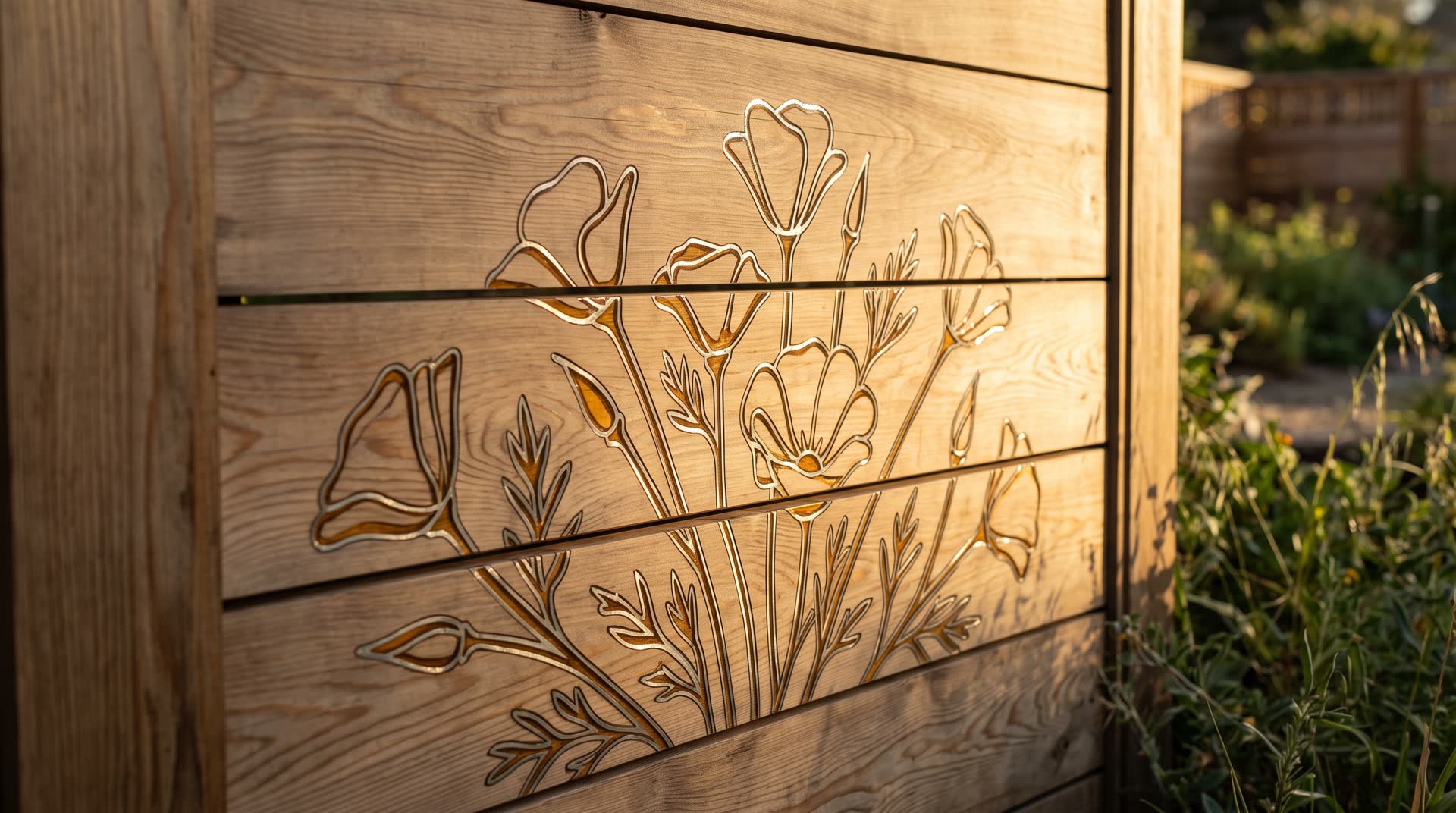
Fence panels carved and inlaid as one continuous mural. A boundary becomes the street's gallery.
Fences, walkways & kitchens turned into art.
A master craftsman rebuilds his life after a crash — carving art into wood and locking it in with molten tin, glowing epoxy and light.
Pending attorney approvalAct 1 draft uses the cut-to-black version before impact. Final footage choice stays with attorney review of claim 118-1665.
On April 26, 2026, my truck was destroyed in a highway crash that wasn't my fault.
The impact came into my side of the cab. There were no airbags. I don't even remember the moment — the doctors call it a traumatic brain injury. It took my sense of smell. Part of my hearing. Some days it takes my balance and my focus. It ended my trucking career for good.
Here is what it didn't take: thirty years of craft in my hands — and the kind of work where precision lives in the machine, not in the operator. That's exactly what CNC manufacturing is.
Right now, my doctors haven't cleared me to work yet. I won't hide that. But look at the calendar the way I do: the campaign runs, then the machines are ordered (8–12 weeks), delivered, installed and calibrated. By the time the first spindle turns, months will have passed — months of recovery. And I'm not walking this road alone:
I have three sons. They'll help me organize the production and carry what I can't yet.
I have AI. This is the part that still feels like a miracle to me. There are things I can't do myself right now — so I learned to work with AI. This entire project — the business plan, the website, the campaign you're reading, even the video — was prepared by an AI assistant working on my computer, while I explained what I wanted in short prompts. For years I dreamed of this workshop and never had the time or money. Now a machine helps a man whose own "processor" got damaged — and honestly, I think that's the most 2026 story there is. In the shop, AI will design patterns with me, write the machine programs, check my work and remember what I forget.
I have the one skill that doesn't fade: I've commissioned CNC machines my whole life — from machine operator to deputy director of a large furniture factory. Setting up a shop is not my dream job; it's my old job.
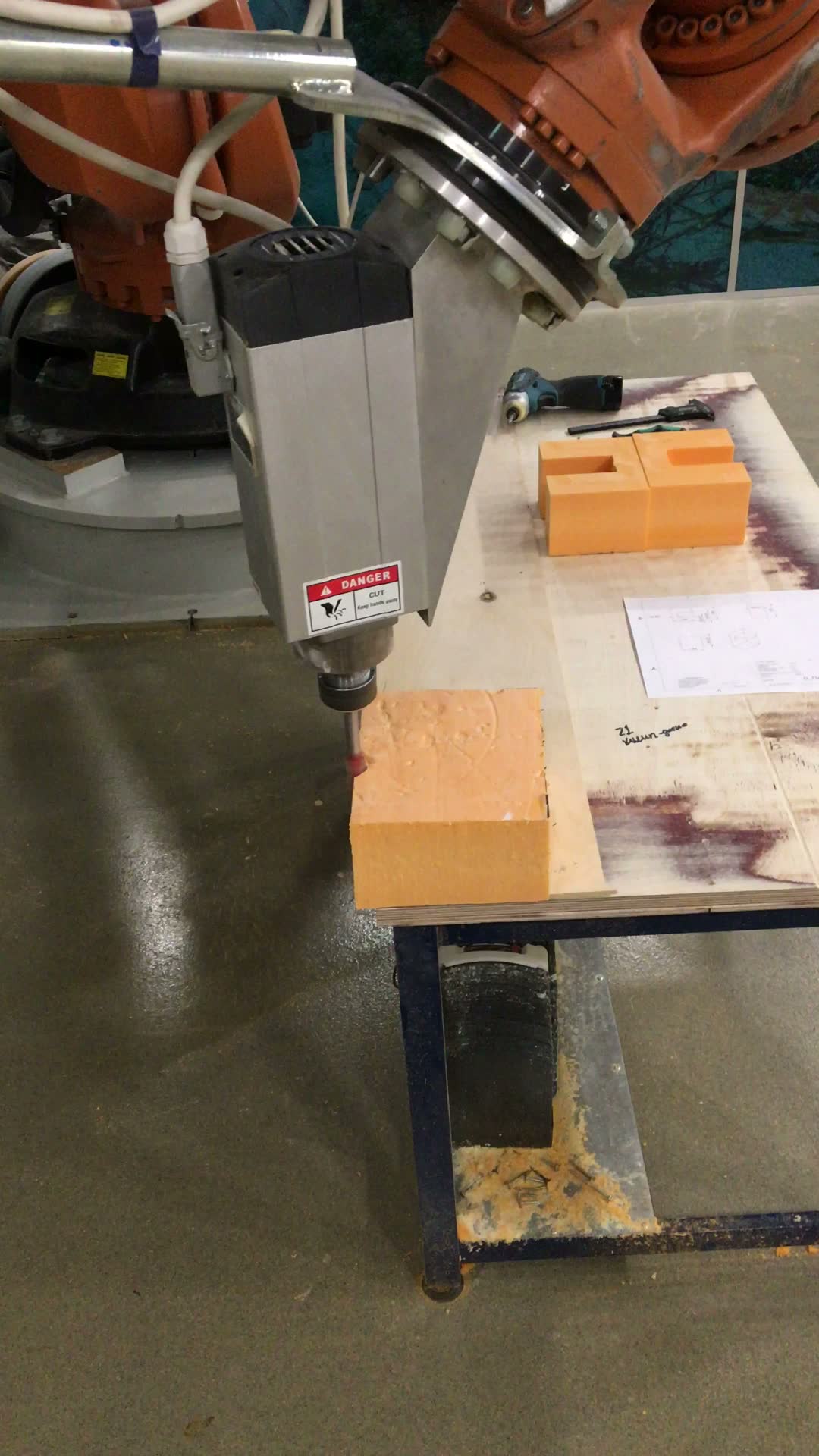
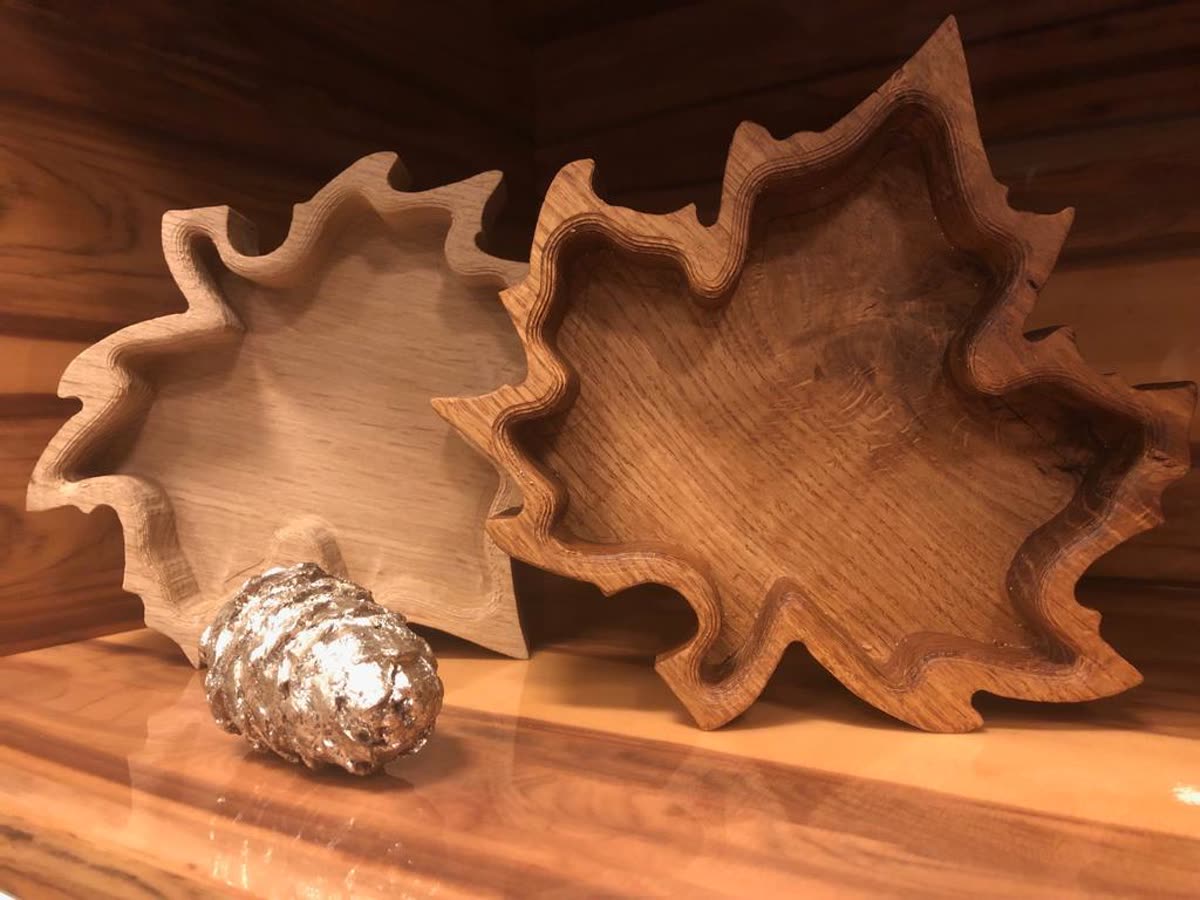
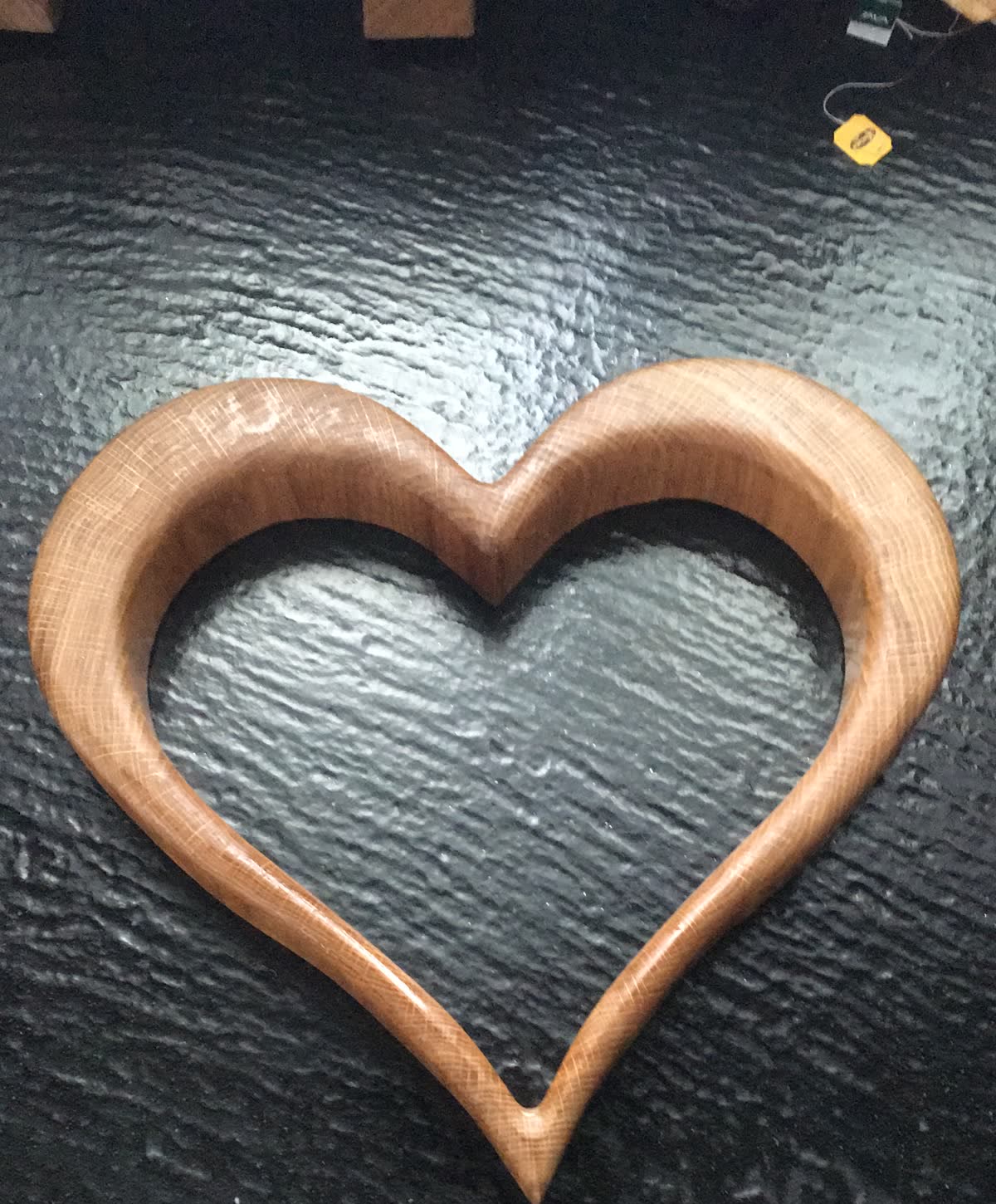
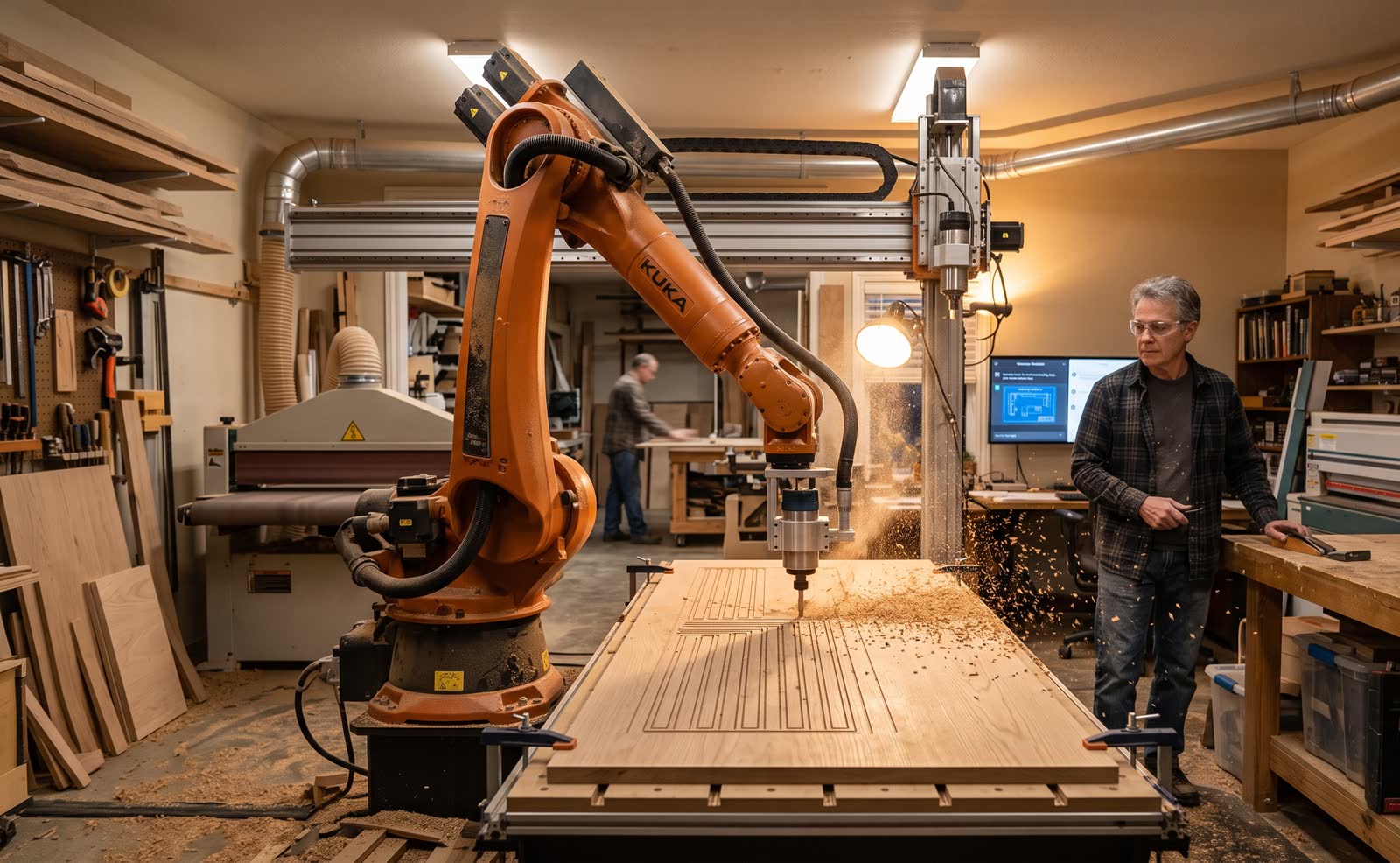
Every piece below was carved by a 6-axis industrial robot I bought from a car-parts factory and rebuilt into a milling machine in my garage — I designed the spindle mount myself and wrote every toolpath. These are real photographs, not renders.
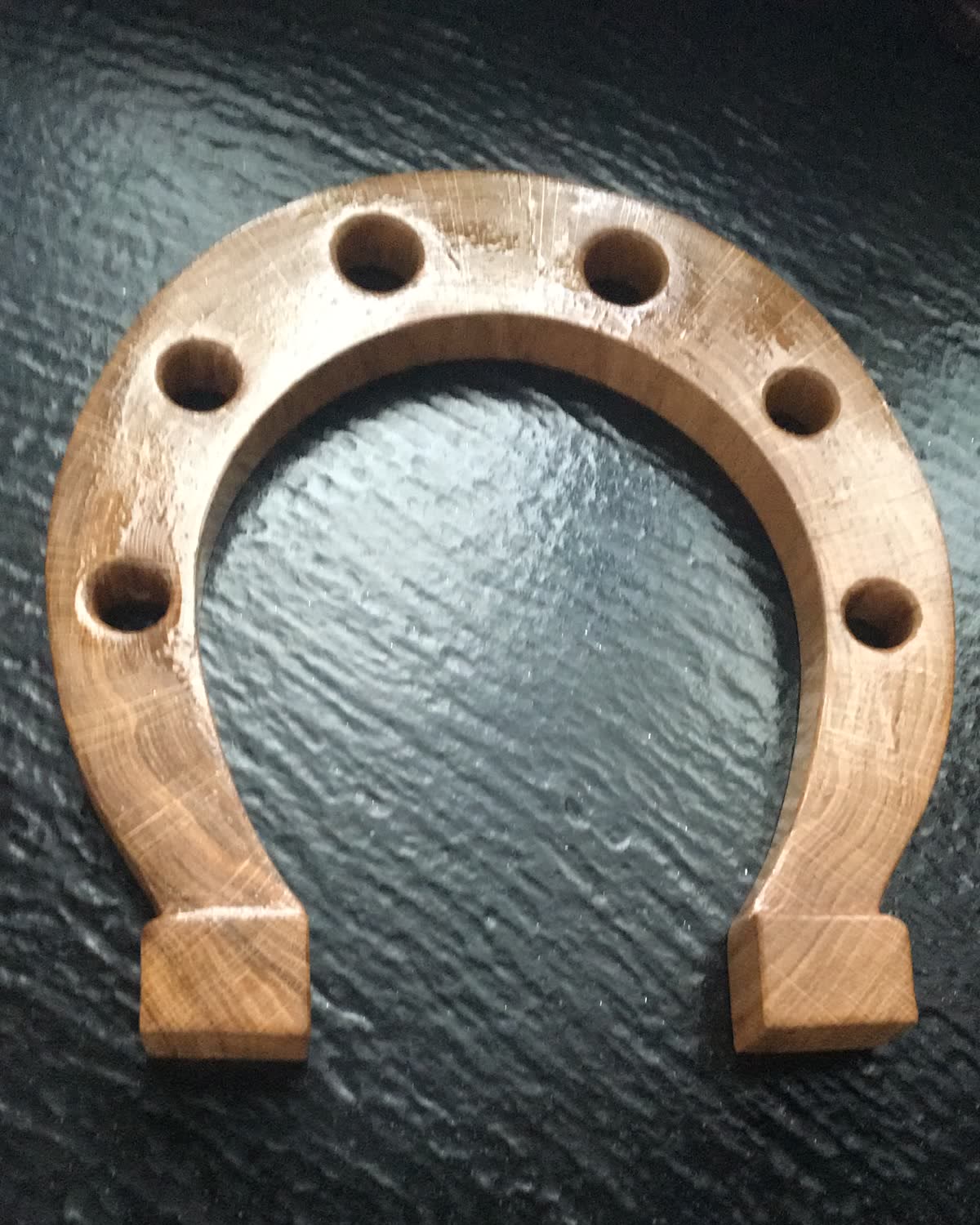
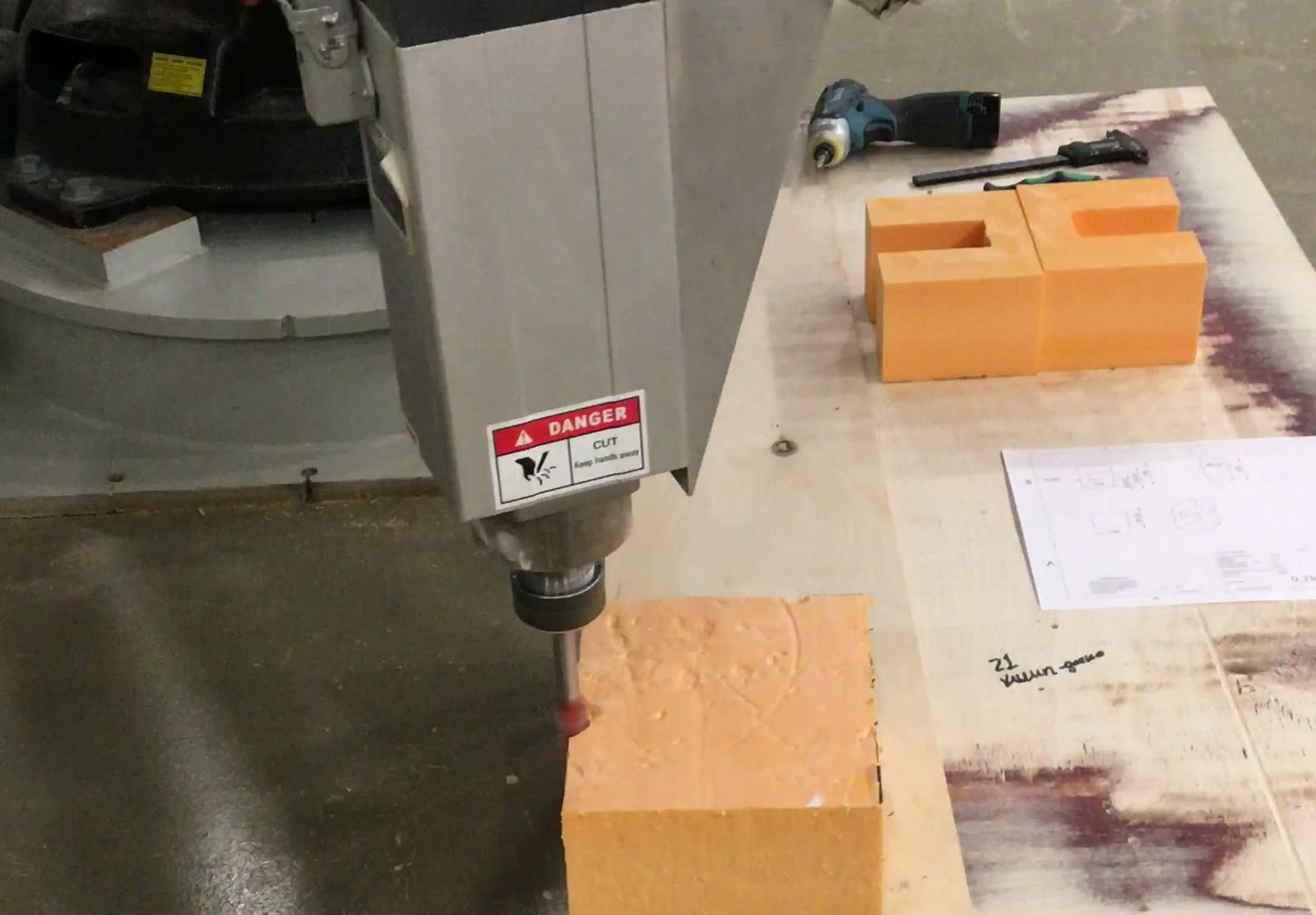
Give me a 5-axis CNC — and imagine what comes next.
The date matters to me. My father passed away on April 26. I choose to believe he was pointing me back to what I love.
I've been building things for over 30 years:
I moved to America in 2020 and started from zero. After the crash, I decided to stop postponing the craft I love most.
I carve narrow channels into solid wood — and fill them with:
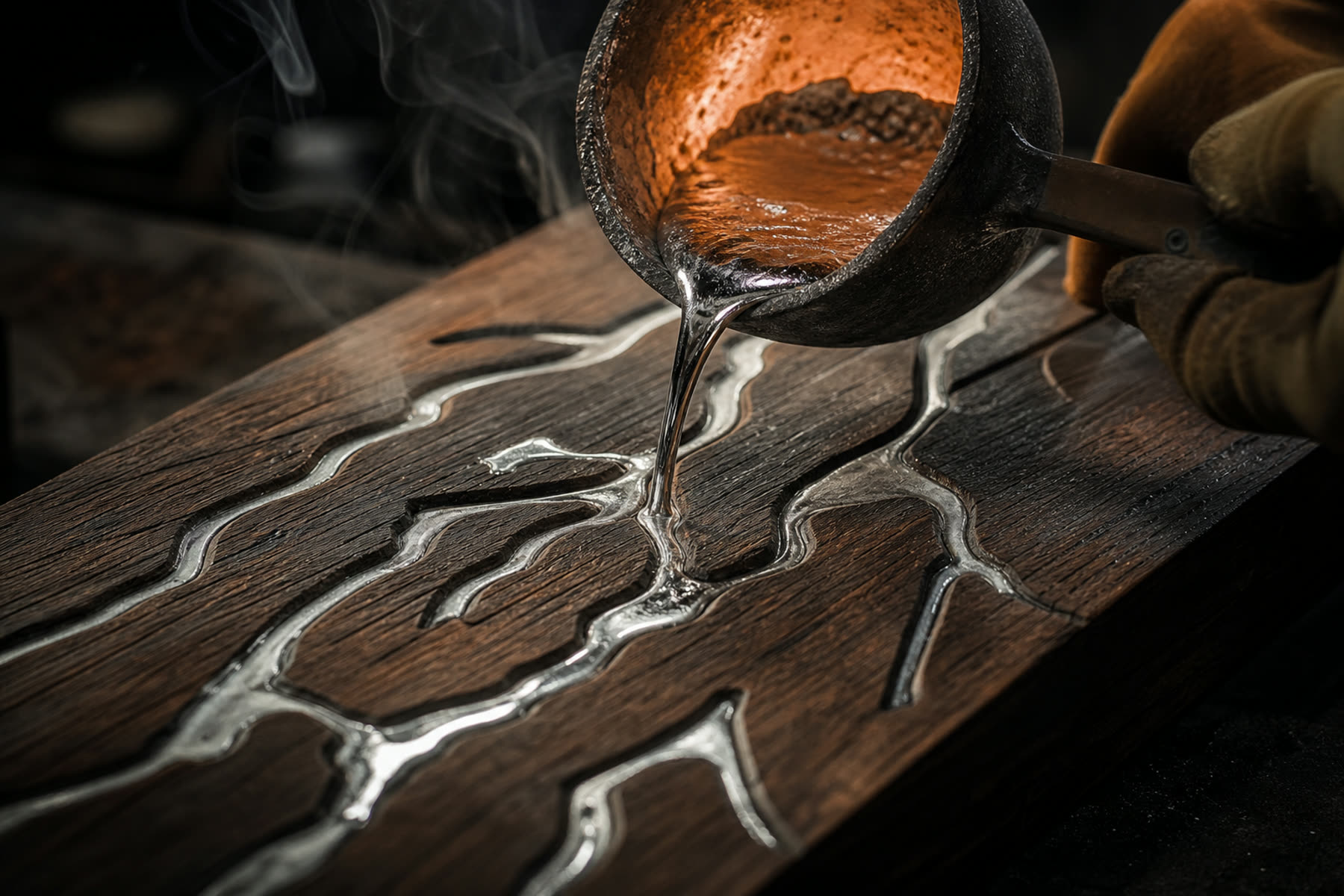
Here's the catch: those narrow undercut lines with clean closed ends can only be machined when the cutter tilts — a 5-axis CNC or a 6-axis industrial robot. A regular 3-axis machine leaves an ugly full-width hole at the end of every line — and a mural has hundreds of lines. That's why this campaign exists: the machine is the one thing I don't have. It's also why you won't see this product copied by a hobby workshop.
Fence panels carved and inlaid as one continuous mural. A boundary becomes the street's gallery.
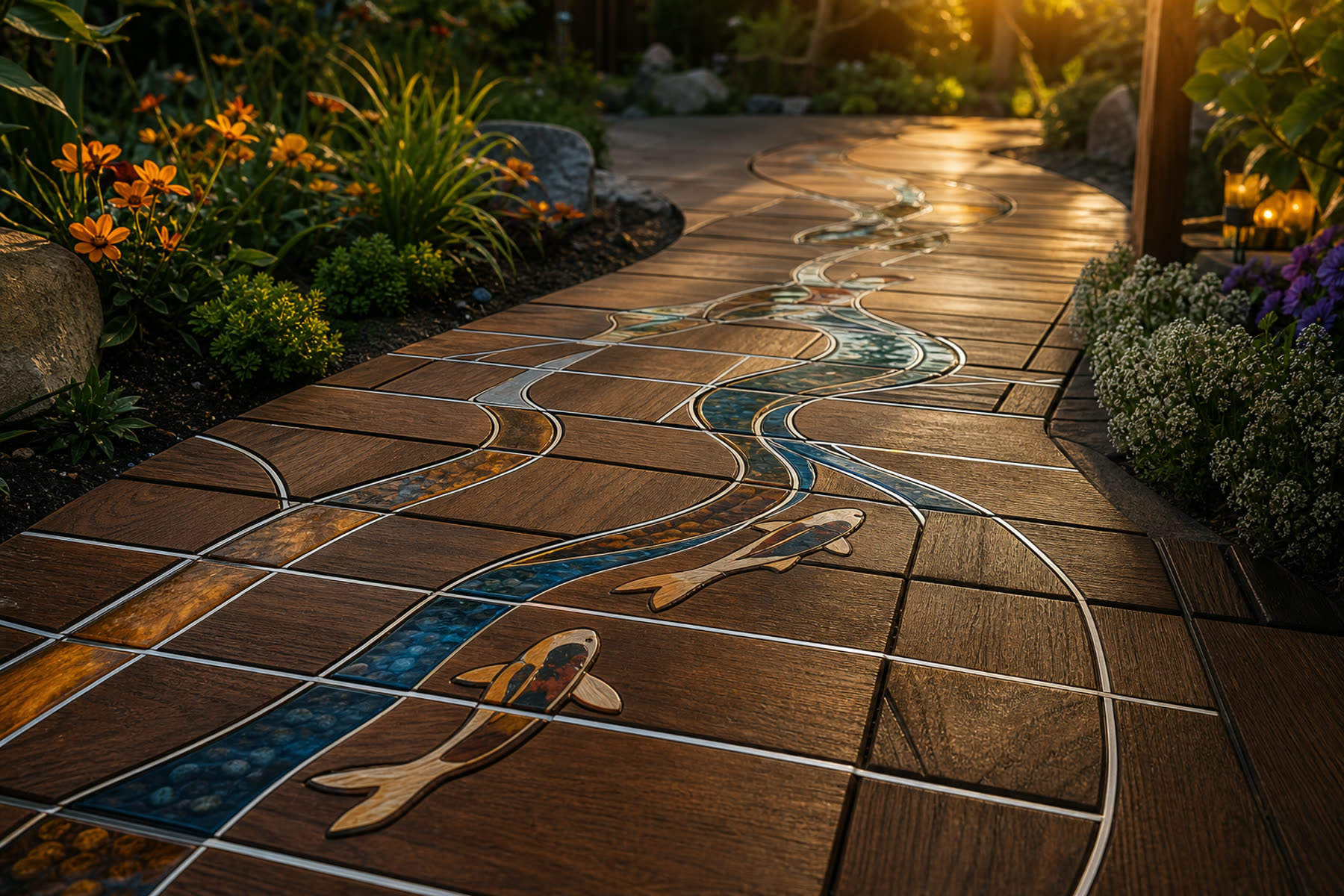
Interlocking wooden walkway tiles connect into one flowing picture underfoot.
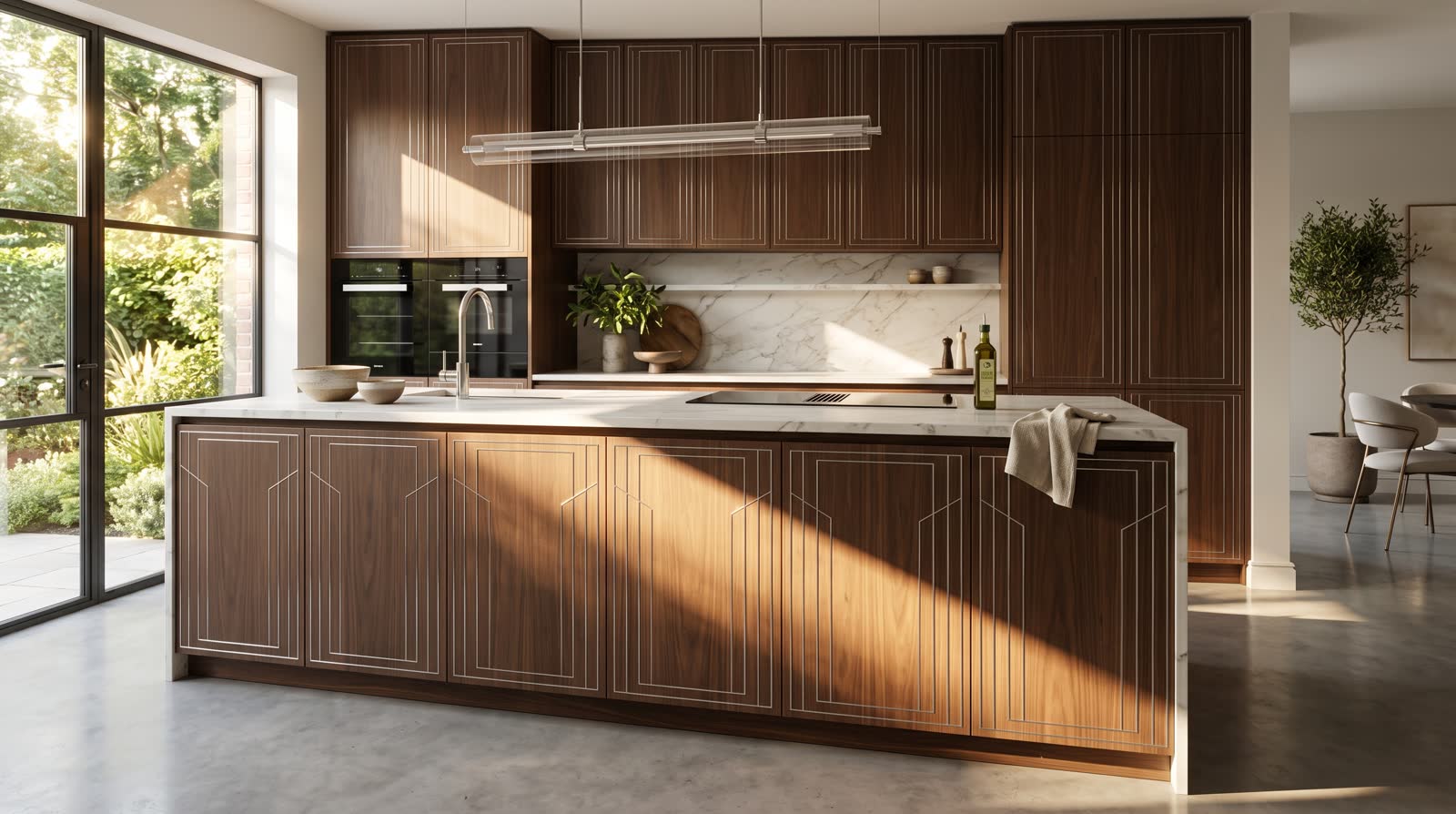
Kitchen fronts, doors and wall panels with the same precise inlay technology.
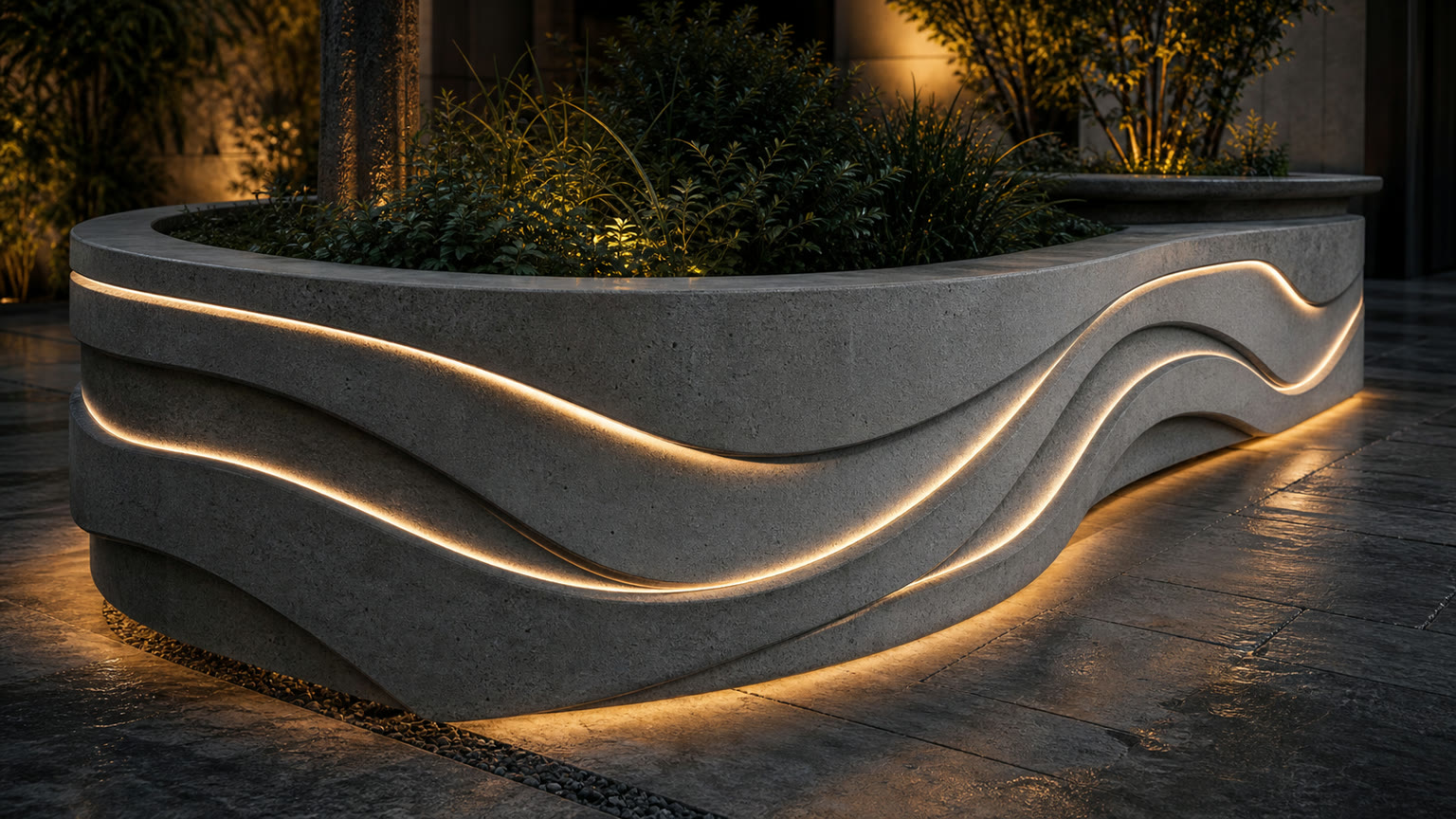
The same 5-axis logic opens a larger product family: not only fences, but glowing outdoor tiles, doors, furniture fronts, wall panels and sculptural concrete. These are concept renders for the Kickstarter draft, built from the same manufacturing idea: precise CNC channels, hidden structure, protected inlays and controlled low-voltage lighting.
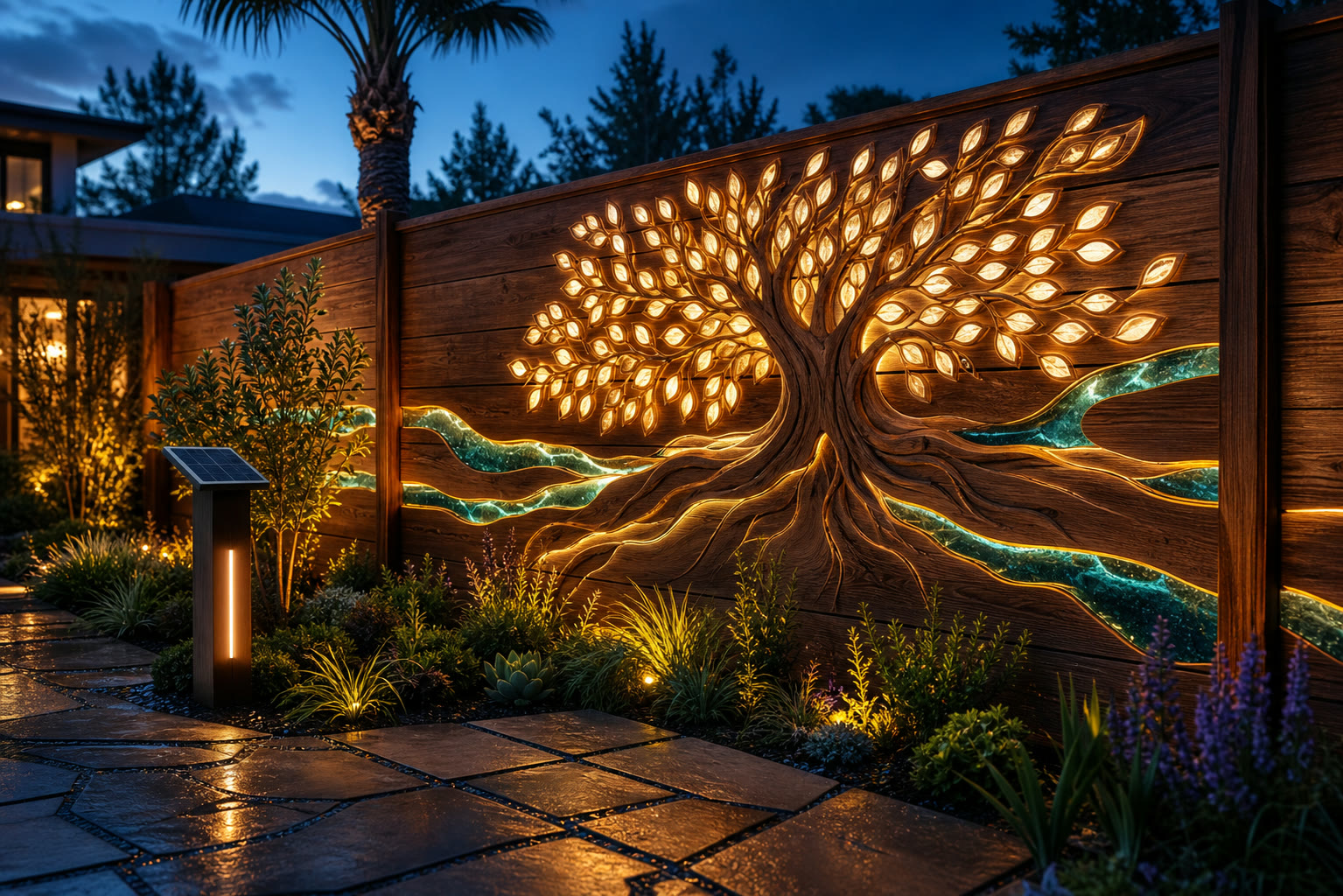
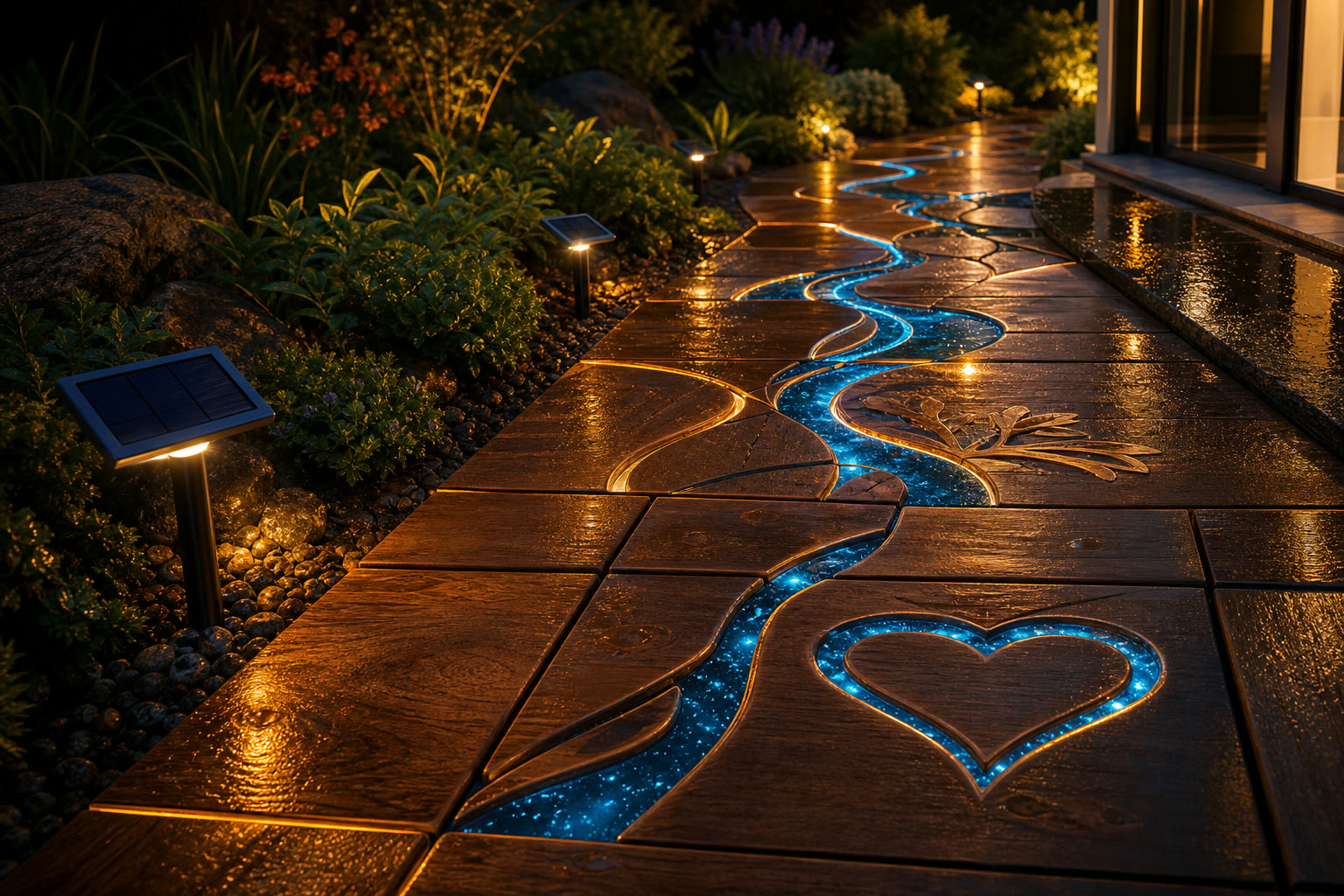
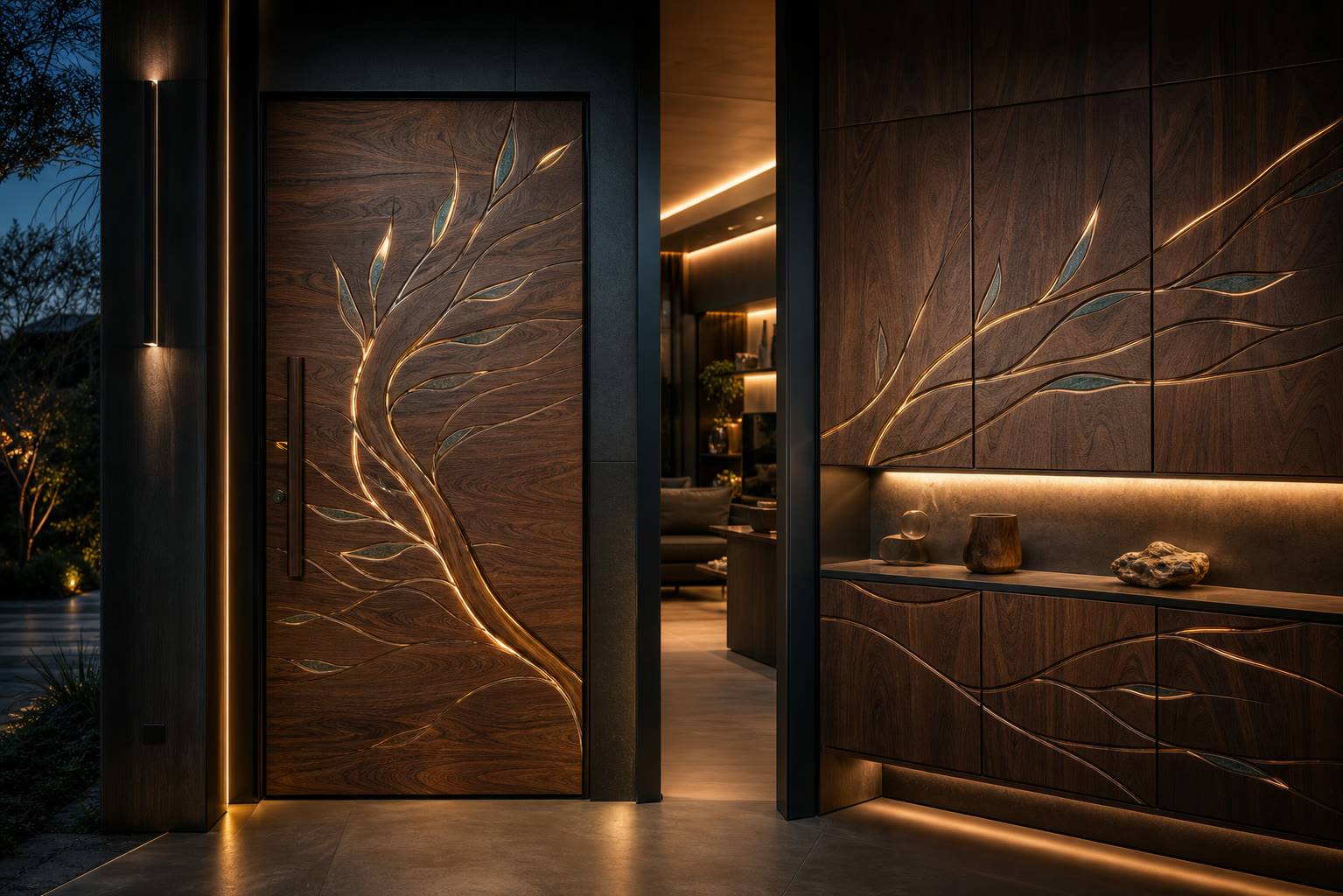
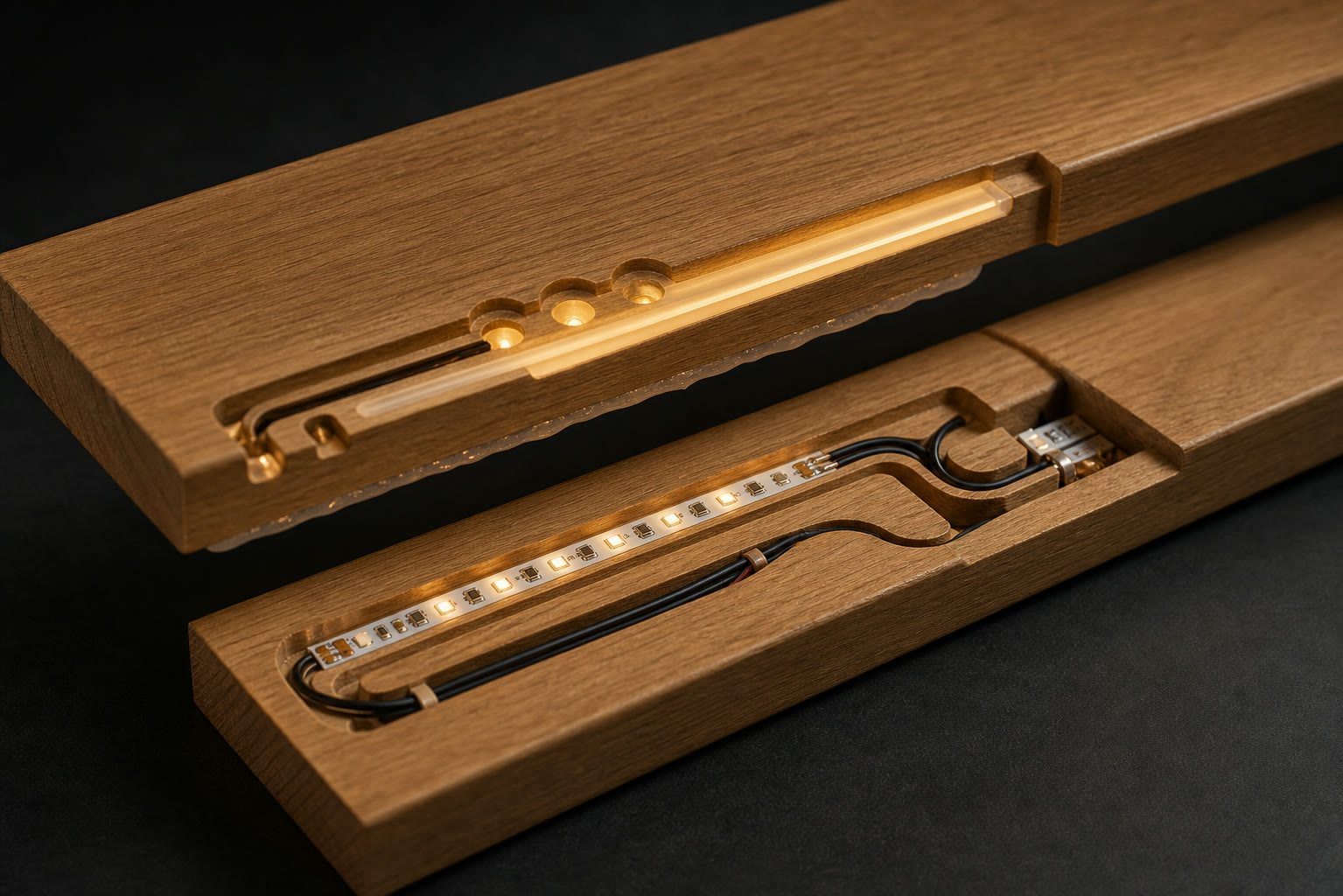
For any wood product: a board can be cut lengthwise, opened like a book, CNC-routed inside, wired, sealed, then glued back together. From outside it still reads as warm solid wood; inside it carries light, wires and service cavities.
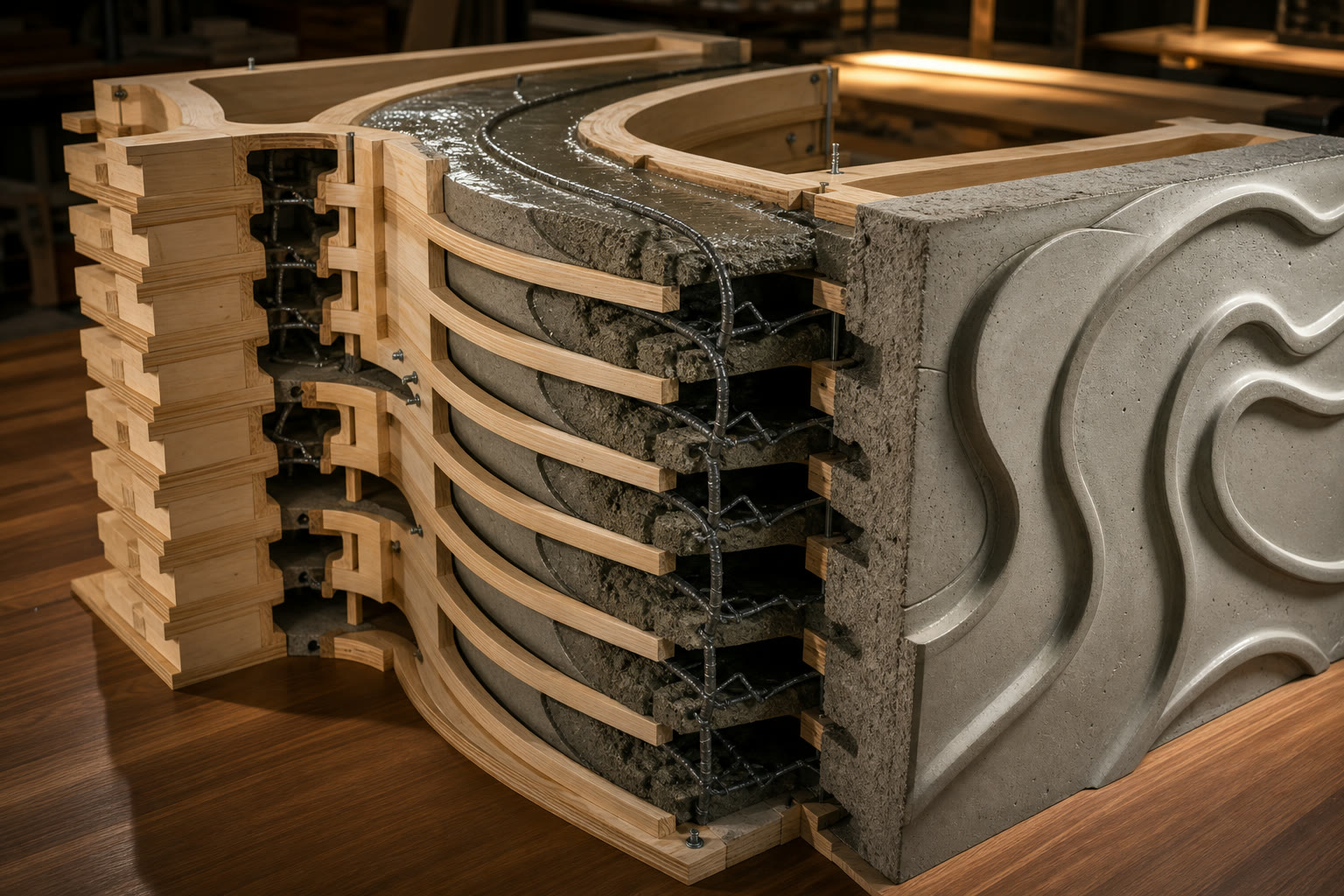
GravityStone is the concrete side of the same digital craft: a sculptural object cast layer by layer in precise CNC-cut formwork. Think of each layer as a square frame with a narrow concrete path inside it; the next layer locks into grooves in the layer below, so geometry is built with repeatable accuracy.
Here's the twist that makes this campaign different: I've already built my machine once. Years ago I bought a 6-axis KUKA industrial robot from a car-parts factory, designed a spindle mount for it myself, and turned it into a milling machine that carved everything you see in the gallery above. A 6-axis robot tilts a thin cutter exactly the way a 5-axis CNC does — narrow undercut grooves, closed line ends, the whole technology.
So instead of asking you for a $65K machine on faith, I'm asking for the setup I have literally already proven — financed smart:
| Item | Cost |
|---|---|
| Lease down payment on a used 6-axis industrial robot (~20% of ~$55K) | $11,000 |
| Spindle, my own mount design, VFD, conversion | $8,000 |
| Professional panel saw | $4,500 |
| Wide-belt sander | $6,000 |
| Tooling: tapered cutters, vacuum table, fixtures | $2,500 |
| First batch of materials, 3-phase electrical, dust collection | $3,000 |
| Total | $35,000 |
Lease payments come out of the first product revenue. Every dollar goes into steel, not consultants — I commission CNC equipment and write post-processors for a living; I'll convert, calibrate and program the robot myself, exactly like last time (there's video).
Honest trade-off, stated plainly: a robot is less rigid than a purpose-built CNC — lighter cuts, slower feeds, faster wear. For carved-and-inlaid art in wood that's fine. For serial speed, there's a stretch goal:
A dedicated 5-axis CNC router: precision and production speed; the robot switches to sculptural work and GravityStone formwork. Rewards ship faster.
Serial MuralWalk line + tin melting station + vacuum/UV epoxy chambers.
GravityStone program + "The People's Sculpture of Sacramento" — a public artwork with every backer's name on its pedestal, the way 160,000 ordinary people once funded the pedestal of the Statue of Liberty.
Your name on the workshop's founding wall page + build updates from day one.
4 hardwood coasters with real tin inlay — our technology in your hand.
One 12″×12″ MuralWalk tile with epoxy inlay — wall art or the first step of your path.
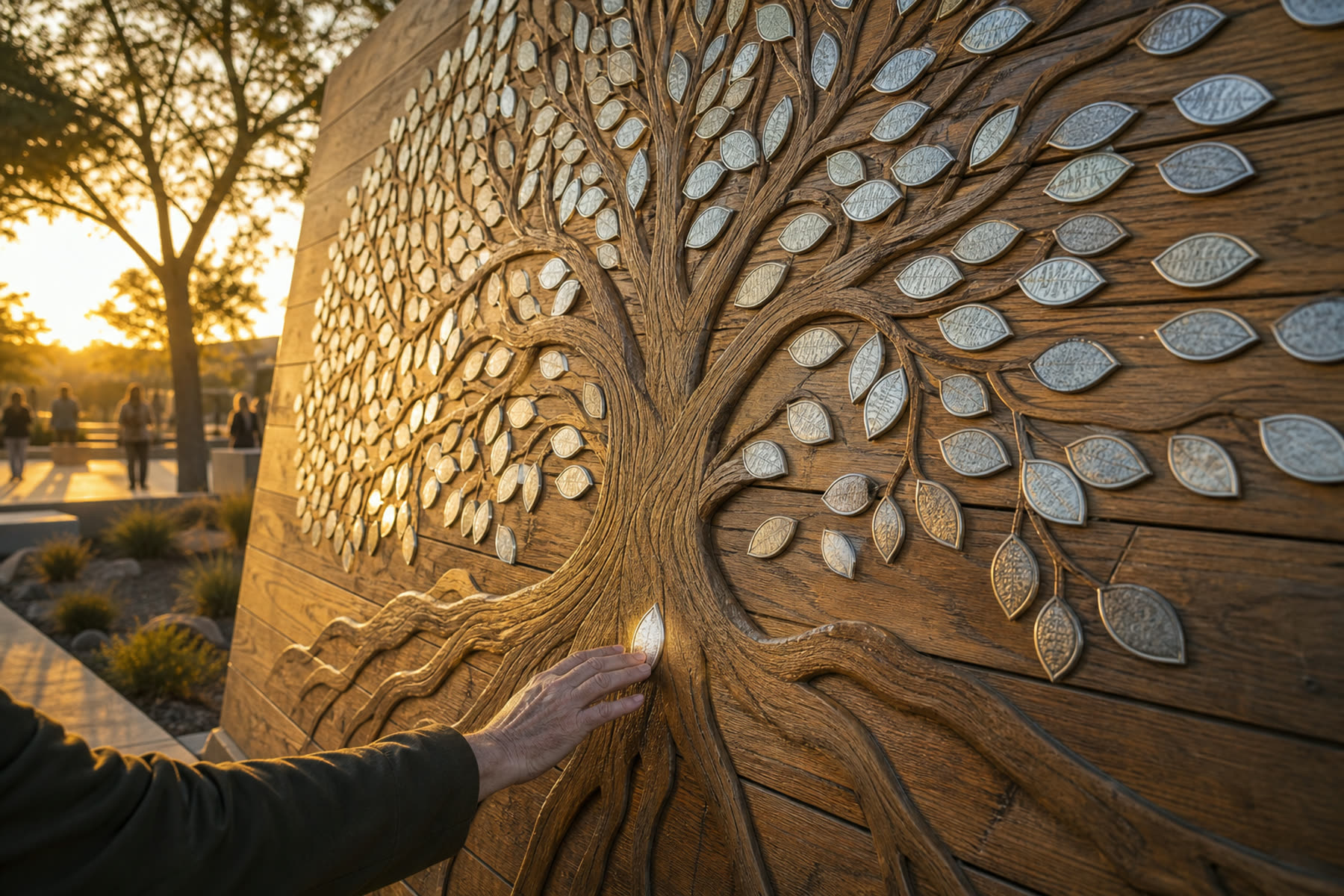
Your name cast in molten tin — a leaf on the Tree of Life, a large public artwork we'll install in Sacramento. Metal. Public. Forever.
6 connecting MuralWalk tiles — one meter of continuous picture.
2×4 ft fence/wall panel, catalog design.
6 tiles with translucent epoxy + embedded LED, solar kit included — the night-river walkway.
Your business logo inlaid in a public-facing mural panel + sponsor plaque — outdoor advertising that never expires.
Your own design, carved and inlaid — fence section or interior panel.
Up to 10 inlaid cabinet fronts — a gallery in your kitchen.
The Tree of Life panel already exists as a design: hundreds of tin leaves, each carrying a backer's name. The first name at the root of the tree will be my father's.
Concept — AI renderFinal artwork will use real names only from backers who choose to be listed.
Honesty first — that's the currency here:
Machine delivery takes 8–12 weeks; the timeline already includes a one-month buffer. If a used machine shortens this, rewards ship earlier.
My health. I'm recovering from a traumatic brain injury and my doctors haven't cleared me to work yet — I say it here plainly. The plan is built around that fact: machine delivery and installation take months (recovery time), the workshop is designed around CNC automation (precision lives in the machine), my three sons help with organization and heavy work, and an AI assistant handles design files, machine programs and quality checklists — it remembers what I forget. If my recovery is slower than planned, my sons and the automation carry the schedule; the timeline includes that buffer.
Can I actually do this? Setting up production lines is what I've done my whole life — from a 120-person factory to a robot in my garage. The only missing piece is the equipment. That's what this campaign buys.

Real creator. Real machine history. Real workshop plan.
Evgenii Kaluzhin — Sacramento, CA. 30+ years in manufacturing and construction. Factory worker → deputy director of a 120-person CNC furniture factory; founder of a construction company that built whole communities; CNC commissioning engineer; the guy who turned a KUKA robot into a woodshop.
I am not asking backers to believe in a render. I am showing the path: the machine I built once, the craft I know, and the new 5-axis CNC setup this campaign can bring to life. Portfolio video →